
Tips for Introducing Allergens Before 6 Months
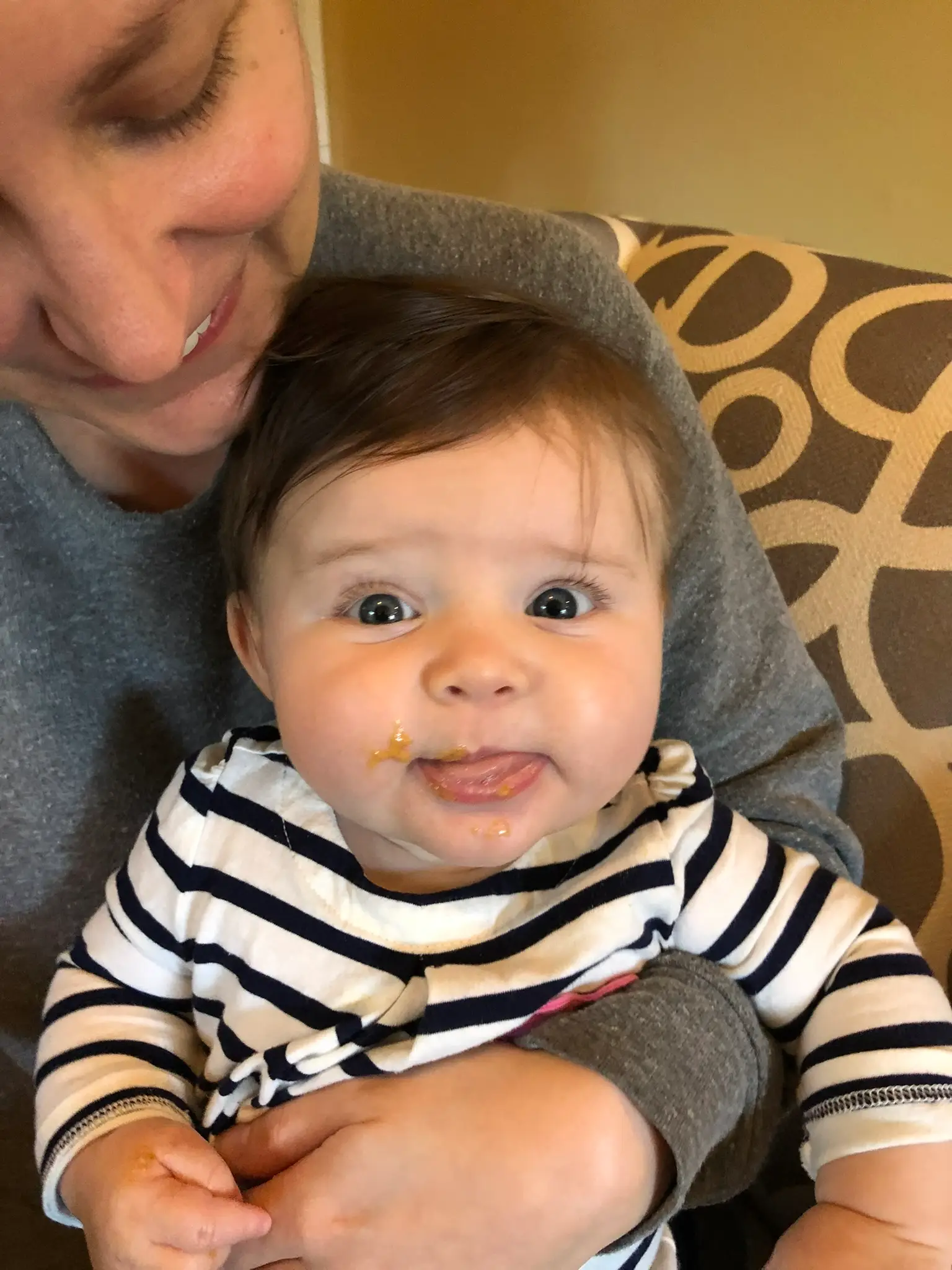
If baby has a high risk of developing food allergies, your doctor may recommend introducing peanut, egg, and possibly other common allergens before the child is developmentally ready to start solids. Our pediatric pros explain how to safely go about it.
Do I need to introduce common allergens to baby at 4 months?
Early introduction of common food allergens is the most effective way to prevent food allergies from developing.
For most babies, allergen introduction can begin at home once they show all of the signs that they are ready to start solids at around 6 months of age. However, some babies have a high risk of food allergy, and their pediatrician or allergist may recommend allergen introduction as early as 4 months of age.
The likelihood of food allergies developing is greatest when babies who are at high risk of food allergies are introduced to common food allergens after 6 months of age. By starting introduction at 4 months of age, you can take advantage of a window of opportunity to introduce allergens at home. However, you need to consult your pediatrician or allergist before you get started if baby already has a known or suspected allergy to any food.
How do you know if baby is at high risk for food allergy?
There are two risk factors that signal baby may be more prone to developing a food allergy:
eczema, especially severe cases
existing food allergy
If baby does not have eczema or any pre-existing food allergy, the risk of developing a food allergy is low, and allergen introduction can wait until baby is developmentally ready to start solids around 6 months of age. After introducing a few foods that are not common food allergens, it’s a good idea to start introducing common allergens to take advantage of the preventative benefits. Use the Solid Starts App to guide you through it.
The risk of food allergy is high if baby has one or both of the risk factors: existing food allergy, or eczema, especially severe eczema. For these babies, it’s important to introduce common allergens earlier than usual even if other solid foods have not yet been introduced. For babies with eczema, but no history of food allergy, allergen introduction can begin at home if you start early, preferably at 4 months of age. However, for babies who have already exhibited signs of allergy to any food (or for babies older than 6 months with severe eczema), consult your pediatrician or allergist before you get started. They can help you create a plan to safely introduce allergens, order allergy testing, and supervise allergen introduction in the clinic.
Do not delay: even though it can feel scary at first, early allergen introduction is an important opportunity to protect your baby from developing food allergies later on.
Tips for Introducing Allergens Before 6 Months
Begin with peanut or egg.
The evidence for the protective benefits of early allergen introduction is strongest for peanut and egg. For this reason, we recommend starting allergen introduction with one of these foods before introducing other common food allergens.
Offer one food allergen at a time.
Start with one allergen before beginning the introduction of another. This way, if there is a reaction, you’ll know which food was responsible. Just a few days of daily exposure is usually enough to establish that a food is well-tolerated.
Start early in the day.
Pick a day when you are able to closely observe baby, and start shortly after waking or right after a morning nap. This way, it may be easier to contact your doctor for guidance in the unlikely event of a reaction. Most reactions occur shortly after exposure, which is why it is best to introduce allergens when at least one adult can focus their full attention on baby, ideally for at least two hours and without distraction from other children or activities.
Safely position baby on your lap.
Place baby on your lap, with their back against your belly. This way, your body supports baby’s head, neck, and body and helps baby sit upright, which allows the child to focus on the task at hand. Sitting upright with support is key to keeping baby safe at mealtime.
Start with a small amount.
Use the tip of a spoon, a teether, or your finger to offer a small amount of mash or puree, such as mashed egg (make sure it is well cooked) or peanut butter (honey free) that has been thinned with water, breast milk, or formula. You do not need to mix the allergen into a puree of another food. That said, if you’d like to offer purees, and baby seems interested in the food, we recommend following responsive spoon-feeding practices. It is not practical to let baby practice feeding themselves before they are developmentally ready to start solids.
Let baby try to taste.
Hold the spoon or your finger near baby’s face, and wait for a moment to allow baby to observe the food. Baby may lean in with their mouth and try to taste—let them. If they do not budge, slowly move the spoon or finger a little closer to their face, then pause and give them another opportunity. If they hesitate, but otherwise seem engaged, you can gently touch the spoon, teether, or finger to their mouth or tongue, but don’t force it. You want baby to associate food with positive experiences, and forcing food into baby’s mouth does not help achieve this goal. If baby is not actively engaged, turns their head, or pushes the spoon or finger away, they are communicating to you that they want to stop. Take a break or end the meal. You can always start again later.
Trust that a small taste is plenty.
Try not to stress about the quantity consumed. At first, just a small taste is enough to expose baby to the food allergen, and it is not practical to expect a young baby to consume much solid food at this stage. As baby grows, so will their appetite, and they will naturally consume more solid food when it is offered. As time goes on, a modest quantity of allergen (such as 2 grams over the course of a week) can help prevent an allergy from developing as long as it is regularly offered throughout the toddler years.
Watch for signs of an allergic reaction.
After baby has a small taste, move on to your next activity while observing baby. If baby shows no symptoms of an allergic reaction after 10 minutes, proceed with your day. Most reactions occur within minutes (but up to 2 hours) after exposure.
Once an allergen is introduced, maintain exposure.
Aim to regularly offer small tastes of the food allergen. Consistency is key: allergists recommend serving food allergens at least once a week, and ideally 2 to 3 times a week until at least 5 years old. Err on the side of offering the food allergen more frequently when possible.
Frequently Asked Questions
Written By
Dr. S. Bajowala, MD, FAAAAI. Board-Certified Allergist & Immunologist
K. Grenawitzke, OTD, OTR/L, SCFES, IBCLC. Pediatric Feeding/Swallowing Specialist
M. Suarez, MS, OTR/L, SWC, CLEC. Pediatric Feeding/Swallowing Specialist
Ready to get started?
Download the app to start your journey.
Expert Tips Delivered to Your Inbox
Sign up for weekly tips, recipes and more!


Copyright © 2026 • Solid Starts Inc